
The Vānaprastha Adventure, Installment 22
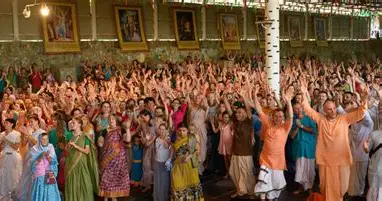
In essence, to advance on the path of vānaprastha life there are three things we can do: up our sādhana, up our sādhu-saṅga, and up our sevā.
Up the sādhana
Sādhana consists especially of our daily routine of spiritual discipline and devotional activities. Ideally, even in householder life we should have a strong program of sādhana. But in any case the vānaprastha āśrama affords us the opportunity to strengthen our sādhana for the sake of advancement in Kṛṣṇa consciousness.
At the most basic: We should strictly follow the four regulative principles—no intoxication, no illicit sex, no meat-eating, and no gambling—and should chant at least sixteen rounds a day, avoiding ten offenses.
For more guidance on basic principles we should follow, we can turn to a short page of standards hand-written by Śrīla Prabhupāda for his early students at 26 2nd Avenue. The page says:
NOTICE
All initiated devotees must attend morning and evening classes.
Must not be addicted to any kind of intoxicants[,] including coffee, tea and cigarettes.
They are forbidden to have illicit sex-connections.
Must be strictly vegetarian.
Should not extensively mix with non-devotees.
Should not eat foodstuff cooked by non-devotee.
Should not waste time in idle talks nor
Engage himself in frivolous sports.
Should always chant and sing the Lord’s Holy Names.
Hare Krishna Hare Krishna Krishna Krishna Hare Hare.
Hare Rama Hare Rama Rama Rama Hare Hare.
____
Thank you,
A. C. Bhaktivedanta Swami
Acharya.International Society for Krishna Consciousness
26 Second Avenue
New York, NY
Dated Nov. 25, 1966
These are basic principles of sādhana that as vānaprasthas we should follow. We can attend morning and evening classes at a local temple, hold such classes at home, or attend them attentively online. And we can follow the other principles as well, especially as found in The Nectar of Devotion.
Sādhana, overall, involves living a regulated life. Rising early every day and following a Kṛṣṇa conscious daily routine can help us make spiritual progress.
Part of this routine should be to bathe regularly, ideally three times a day. “It is the practice of the yogī, brahmacārī, vānaprastha and sannyāsī to bathe at least three times daily—early in the morning, during noontime and in the evening.”1 And for internal cleanliness—for purification of heart—regular hearing and chanting are essential.
Now is also the time to read and study. When Sanātana Gosvāmī retired from government life, his main occupation was to study Śrīmad-Bhāgavatam. As Śrīla Prabhupāda writes, “He engaged ten or twenty learned brāhmaṇas and began an intensive study of Śrīmad-Bhāgavatam in their company.”2
Following in the footsteps of Sanātana Gosvāmī, we too can study Śrīmad-Bhāgavatam in the association of devotees. Many groups and courses provide systematic study, and we can take advantage of them. If we can take courses “on site,” away from home, so much the better. And at a holy place such as Māyāpur or Vṛndāvana, better still.
In our regular reading and hearing, we can notice—just notice—the things Śrīla Prabhupāda says about retirement and vānaprastha life. When we read such statements, we can consider what those statements might mean to us—how they might apply in our own life. And this can enable us to take steps, large or small, to bring our life closer and closer to the understandings we’ve gained from Śrīla Prabhupāda’s teachings.
Chanting japa, of course, is an essential part of sādhana. While chanting we should try to avoid the ten offenses. And vānaprasthas may wish to chant more rounds. In Fiji one older, retired devotee, Bhuvana Mohana Dāsa, asked Śrīla Prabhupāda what his engagement should be, and Śrīla Prabhupāda said, “More japa.” Similarly, Śrīla Prabhupāda told Bhuvana Mohana’s wife she should fully engage in Deity worship.3
Pūjā and tulasī sevā are suitable engagements for vānaprasthas. As Nārada told the hunter:
Leave your home and go to the river. There you should construct a small cottage, and in front of the cottage you should grow a tulasī plant on a raised platform.
After planting the tulasī tree before your house, you should daily circumambulate that tulasī plant, serve her by giving her water and other things, and continuously chant the Hare Kṛṣṇa mahā-mantra.4
Kīrtana and bhajana are central for devotees in every order. We can also take greater advantage of periodic occasions for hearing, chanting, and remembering Kṛṣṇa, such as Ekādaśīs, Karttika, and the appearance and disappearance days of the Lord and His devotees. And we can pray to Kṛṣṇa for help and guidance.
Up the sādhu-saṅga
Sādhu-saṅga is different from just hanging out with devotees. Its essence lies in Kṛṣṇa consciousness, awakened and nourished by hearing about, chanting about, and serving Kṛṣṇa. We can learn more about sādhu-saṅga, the association of devotees, from verses 4 and 5 of The Nectar of Instruction. We should be kind and merciful to devotees less advanced, cultivate friendship with devotees who serve on a level equal to our own, and submissively inquire and hear from devotees who are more advanced and serve them.
As Nārada Muni tells Yudhiṣṭhira Mahārāja:
śṛṇvan bhagavato ’bhīkṣṇam
avatāra-kathāmṛtam
śraddadhāno yathā-kālam
upaśānta-janāvṛtaḥsat-saṅgāc chanakaiḥ saṅgam
ātma-jāyātmajādiṣu
vimuñcen mucyamāneṣu
svayaṁ svapnavad utthitaḥ“A gṛhastha must associate again and again with saintly persons, and with great respect he must hear the nectar of the activities of the Supreme Lord and His incarnations as these activities are described in Śrīmad-Bhāgavatam and other Purāṇas. Thus one should gradually become detached from affection for his wife and children, exactly like a man awakening from a dream.”5
The programs held in Kṛṣṇa temples like those of ISKCON are meant to provide opportunities for sādhu-saṅga and Kṛṣṇa-kathā, whether one serves as listener or as speaker.
Similarly, communities of devotees may include small groups who meet under different names, again for sādhu-saṅga and Kṛṣṇa-kathā. Vānaprasthas can take the opportunity to attend these meetings—and, again, not only attend but also, when invited, speak at such programs as well.
Among other things we can do early on for advancement in vānaprastha life is to associate with other devotees similarly inclined towards retirement. While writing this book, I spoke twice to a group of older devotees at Bhaktivedanta Manor who were meeting regularly to discuss topics concerning vānaprastha life with a view towards seriously embarking on the vānaprastha path themselves.
The saṅga of devotees who are thinking in this way can be enriching. Sharing our thoughts and experiences, we can ask one another, in a spiritual context, “What are your plans for your retirement?” Or, as we actually retire, we can ask one another what we’re doing in this phase of our devotional lives and gather ideas and inspiration.
Festivals and retreats, of course, provide further opportunities for sādhu-saṅga, as do the courses we may attend for scriptural study.
Apart from organized programs, devotees can look for every opportunity to get together with other devotees for sādhu-saṅga.
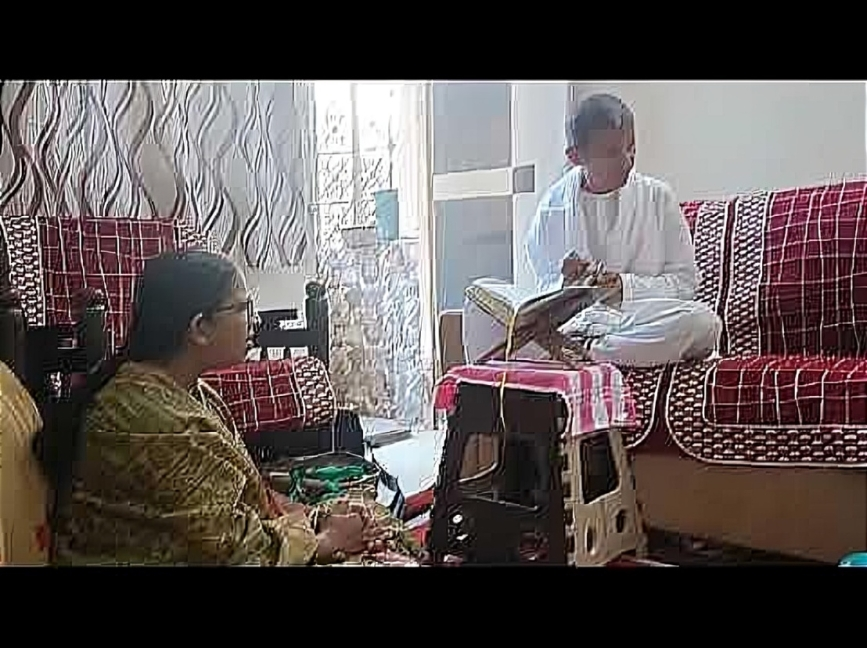
One important way to get sādhu-saṅga—and for spiritually-minded householders this is a core practice—is to invite sādhus to your home.
This means not just feeding a sādhu nicely, giving him a donation, asking for blessings, and snapping a photo. It means taking the opportunity to hear from a saintly devotee about Kṛṣṇa and spiritual progress, to inquire about how we can advance in spiritual life, and by such association to further cultivate detachment, spiritual knowledge, and enthusiasm in devotional service (vairāgya-vidyā nija-bhakti-yoga).
Otherwise we can “associate but not associate.” We can hang out with devotees but not get the same spiritual benefit. But if we take the opportunity to associate with devotees in Kṛṣṇa consciousness and serve them, and especially to associate with devotees more advanced on the path of devotional service performed with knowledge and detachment, this becomes our life: to come together with other devotees to focus on spiritual progress and Kṛṣṇa’s service.
One of the principles of devotional service mentioned in The Nectar of Devotion is that one should associate with devotees who are considered more advanced.6 Bhakti-rasāmṛta-sindhu (1.2.91) commends “associating with superior devotees with whom one shares affection and a similar nature and taste” (sajatīyāśye snigdhe sādhau saṇgaḥ svato vare).
In Śrīmad-Bhāgavatam (1.18.13) the sages of Naimiṣāraṇya said to Sūta Gosvāmī:
tulayāma lavenāpi
na svargaṁ nāpunar-bhavam
bhagavat-saṅgi-saṅgasya
martyānāṁ kim utāśiṣaḥ“The value of a moment’s association with a devotee of the Lord cannot be compared even with the value of attaining the heavenly planets or liberation from matter, and what to speak of worldly benedictions in the form of material prosperity, which are for those who are meant for death.”
As Śrīla Prabhupāda comments, “[T]he association of pure devotees is so transcendentally valuable that no kind of material happiness can compare to it.”7 Śrīla Prabhupāda also cites the Hari-bhakti-sudhodaya (8.51), in which Hiraṇyakaśipu tells Prahlāda Mahārāja, “My dear son, association is very important. It acts just like a crystal stone, which will reflect anything put before it.” Śrīla Prabhupāda comments, “Similarly, if we associate with the flowerlike devotees of the Lord, and if our hearts are crystal clear, then certainly the same action will be there.”8
With modern technology, one now has the opportunity to hear from sādhus all over the world (and travel, virtually, to holy places). But technology should not make us lazy. As mentioned before, a central part of traditional vānaprastha life since ancient times has been travel to holy places—in person. Why are vānaprasthas (among others) advised to visit a holy place? Of course, to associate directly with the saintly devotees there. Such devotees can give us valuable guidance. And even the place itself will give us advice, encouraging us in different ways to become free from family encumbrances and dive deeper into service to Kṛṣṇa’s lotus feet. Śrīla Prabhupāda said that Vṛndāvana is the one place in the universe where “Kṛṣṇa automatically reveals.”9
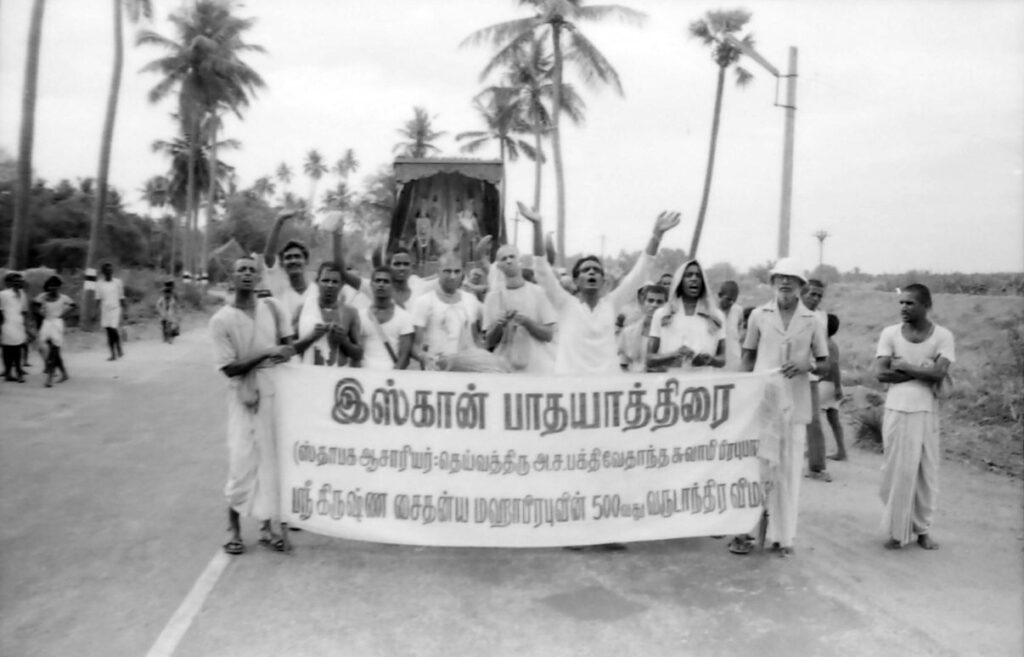
The traditional way of travel to holy places has been padayātrā, a journey on foot. Even today, one may travel alone on foot to holy places. Or one may travel with others in an organized group. For a year and a half in 1985 and 1986 I had the good fortune to travel throughout South India with an ISKCON “saṅkīrtana padayātrā” to mark the five-hundredth anniversary of the appearance of Śrī Caitanya Mahāprabhu. Whatever else was going on in ISKCON—or the rest of the world—we were distant from it, chanting Hare Krishna and walking down the road, fifteen or twenty-five kilometers a day, from city to city, village to village, stopping every evening to put on a spiritual program and have some rest and then leaving again the next morning. Looking back, I think of my time on padayātrā as one of the spiritually most rewarding times in my life.
Included in our party were about two dozen Gujarati men and women in their sixties, seventies, and eighties who were not ISKCON devotees but who took the opportunity to take part in the pilgrimage from Gujarat to Kanyakumari to Śrīdhāma Māyāpur. Instead of staying home with their families, they had the extraordinary experience of traveling to holy places throughout India, walking and serving and chanting Hare Krishna on the way. By the time they reached Māyāpur, several of them had come forward for initiation.
That all-India party is still on the road, and it has spawned other parties as well, traveling within various Indian states. And anyone can join. You can join, for as much time as you’d like.
Up the sevā
The duties of work and family life take up so much of a householder’s time that householders often ask where they can get the time for hearing and chanting and reading, to say nothing of rendering practical service. And the Kṛṣṇa consciousness movement is to some extent hampered by having large numbers of householders who, though giving money, have no time. They’re largely not available to serve as pūjārīs, not available for preaching engagements, not available for this, not available for that—because they’re busy. As brahmacārīs they had lots of time, but as gṛhasthas they’re busy, understandably. So they are less available for those services, and the services less available for them.
But now here’s an opportunity. In vānaprastha life one can again have the benefit one had as a brahmacārī, before marriage, of having time. So one can serve the temple Deities, or serve them more. One can serve in the temple itself. One can use the lifetime of skills one has developed to spread the Kṛṣṇa consciousness movement, broadening one’s interests well beyond the family.
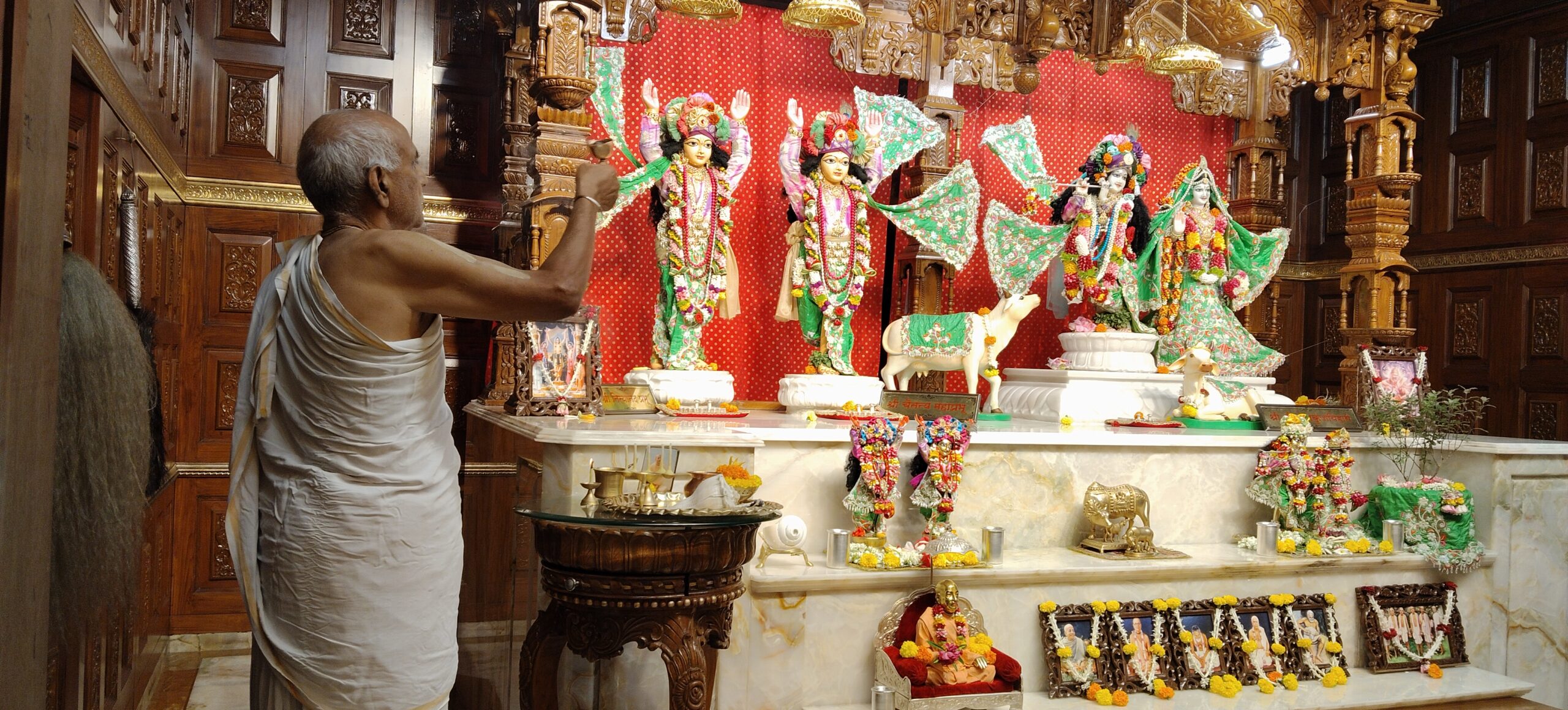
So therefore we say “The Vānaprastha Adventure.” It’s like a new life. “I’ve freed myself, or I’m in the process of freeing myself, from so many burdens and responsibilities. So now I can do all these things for Kṛṣṇa that I always wanted to do, or that I used to do but I’m missing.”
For us the point of the vānaprastha āśrama is not to go to the forest and live on fruits and berries but to serve. This is our ultimate purpose. In the vānaprastha āśrama we can retire from family-based activities and use our energy in a way that benefits ourselves and benefits others. And this is good for us, for others, and for the success of the Kṛṣṇa consciousness movement.
What are some of the ways we can serve?
- There’s temple service, whether as pūjārīs, as cooks, as organizers, as cleaners, as anything.
- There’s service for which we may have specific occupational skills, whether in finance, in construction, in sales, or whatever.
- There’s any kind of Vaiṣṇava sevā—service we can do for devotees.
- There’s counseling and mentoring—the service of guiding devotees in their Kṛṣṇa conscious life and practice. We can use our experience in many years of devotional life to help other devotees advance in devotional service. And specifically we can use our many years of experience as gṛhasthas to help guide younger married couples through issues not meant for sannyāsīs and brahmacārīs to have to deal with.
- We may help raise funds.
- And then there’s straight-out preaching, of all kinds. We can get out and preach.
- We can do home programs, congregational programs, and outside engagements of all sorts.
- We can give temple classes—at our local temple and other temples. As the Kṛṣṇa consciousness movement expands, new centers get started—and don’t always get much guidance or senior association. So we can visit them and help them.
- We can distribute books, whether with kīrtana parties, in the temple, on the street, in shops, in corporate venues, on the internet, or anyplace else we can think of. And if we’re expert we can train and inspire others to distribute books.
- We can go door to door and tell people about Kṛṣṇa, one at a time. Or we may seek out public leaders, whether leaders in music, in art, in business, in politics, in literature, in science, or in any other field, and speak with them about Kṛṣṇa and the teachings of Kṛṣṇa consciousness. And when people, big or small, show an interest in Kṛṣṇa consciousness, we can help them cultivate that interest.
- We can speak on radio or television programs, or similar programs on the internet.
- We can lead seminars, retreats, or festivals, or organize or assist in them and help make them a success.
- We can teach courses in śāstra, whether for individual temples, for the Vrindavan or Mayapur Institutes for Higher Education, or for other educational programs. Or we can teach in schools and colleges outside the devotional world.
- We can teach young people and children. ISKCON’s flourishing Indian congregations in the Middle East began when one enthusiastic older devotee from South India, Mahā-maṇi Kṛṣṇa Dāsa, started teaching śloka classes for children. The children came, and their parents came with them. So rather than looking after a few biological grandchildren, older devotees can become the grandparents of many grandchildren spiritually.
- We can write. We can write for Back to Godhead, for other Kṛṣṇa conscious or secular magazines, for internet websites, devotional or not. We can write letters to newspapers. (A secret: Newspapers, magazines, websites, and other media outlets need content.) Or we can write letters to public leaders (as Śrīla Prabhupāda did). We can write books. There’s no end to the opportunities.
Of course, even as gṛhasthas we can do these things. But now we can do more.
Or we may start something new—a new Kṛṣṇa conscious program, a fresh but legitimate approach, not tried or perhaps not even thought of before.
There may come a time in our vānaprastha life when we can’t do much service. Therefore, pañcaśordhvaṁ vanaṁ vrajet: by fifty. Then we’re still likely to have energy, to have vitality, and decent health, we hope. So we still have years in which we can render lots of active service. Seize that time.
Notes:
1 Bhāgavatam 3.33.14, purport.
2 Teachings of Lord Caitanya, chapter 2.
3 Bhuvana Mohana Dāsa, personal interview.
4 Cc. Madhya 24.260‒61.
5 Bhāgavatam 7.14.3‒4.
6 The Nectar of Devotion, chapter 6, item 42.
7 The Nectar of Devotion, chapter 12, under “Associating with Advanced Devotees.”
8 Ibid.
9 Letter to Janārdana, Haṁsadūta, Himavatī, and Pradyumna, June 28, 1967. A word of caution, however: We should be careful to avoid associating with people who may misguide us. This includes not only outright cheaters and people misguided themselves but also sincere devotees dedicated to a path substantially apart from the one our spiritual master has said should be ours. Śrī Caitanya Mahāprabhu cautioned Jagadānanda Paṇḍita, “Do not mix freely with the residents of Mathurā; show them respect from a distance. Because you are on a different platform of devotional service, you cannot adopt their behavior and practices.” (Cc. Antya 13.37) The Lord advised him to visit Vṛndāvana in the company of Sanātana Gosvāmī and “not leave his association for even a moment.” (Cc. Antya 13.38)
This is part of a draft
This is an excerpt from a new book I have in the works—The Vānaprastha Adventure, a guide to retirement in spiritual life. While I’m working on it, I’ll be posting my draft here, in installments. I invite your comments, questions, and suggestions.

You must be logged in to post a comment.