
The Vānaprastha Adventure, Installment 24
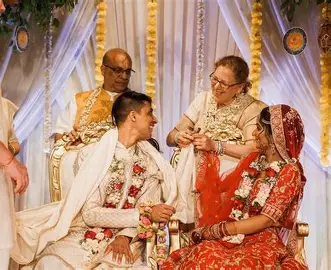
As far as possible, the duty of taking care of the elderly should be taken up by their biological children. A son should think, “To take care of my parents is my duty.”1 Gṛhastha life has its obligations, and this is one of them. Family life is not simply a joy ride. It entails serious responsibilities. And one of them is to take care of one’s elderly parents—and, more broadly, to take care of vānaprasthas. Taking care of vānaprasthas is the duty of the gṛhastha community.
One āśrama supports three
According to the Vedic social system, the brahmacārīs, vānaprasthas, and sannyāsīs dedicate their full time for spiritual activities, and only the gṛhasthas work and earn money. And therefore this one āśrama—the gṛhastha āśrama—has the responsibility to financially support the other three.2 Śrīla Prabhupāda writes, “In this way, every member of society was given a chance to retire for a higher order of spiritual culture, and the householders neglected no one.”3
Among the four āśramas, the gṛhasthas have a license for restrained sense enjoyment, and supporting the other three āśramas is part of the cost for that license.4 The brahmacārīs, vānaprasthas, and sannyāsīs are considered the children of the society—that is, of the gṛhasthas. And these children the gṛhasthas are duty-bound to maintain.5
The vānaprasthas should live simply, so as not to burden the gṛhasthas. And sannyāsīs too, though often addressed as “Mahārāja,” should not live like kings at the expense of the householders. As Śrīla Prabhupāda writes, in former days “The brahmacārīs, vānaprasthas, and sannyāsīs all curtailed their necessities to the minimum, and therefore no one would begrudge maintaining them in the bare necessities of life.”7
As Śrīla Prabhupāda writes, the brahmacārīs, vānaprasthas, and sannyāsīs “collect alms from the gṛhasthas, and thus they secure the bare necessities of life and cultivate spiritual understanding. By helping the other three sections of society cultivate spiritual values, the householder also makes advancement in spiritual life. Ultimately every member of society automatically becomes spiritually advanced and easily crosses the ocean of nescience.”6
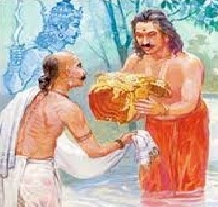
If we want to have a social system that includes vānaprasthas, or if we want to become vānaprasthas ourselves when the time comes, then the gṛhasthas need to support the vānaprasthas, and the vānaprasthas need to live simply. The gṛhastha devotees should think, “These senior devotees are like our parents and grandparents, so we have to serve them.” And the vānaprasthas should be considerate of the gṛhasthas as well.
The gṛhasthas have the duty to support the elders under whose care they have grown up. And later the gṛhasthas will in turn become the elders and be supported.
Ways gṛhasthas can offer support
Charitable gṛhasthas, especially those who are prosperous, can make a social contribution by providing for vānaprasthas in various ways.
- As mentioned before, gṛhasthas can support particular retired devotees.
- Gṛhasthas can fund āśramas to provide for the living quarters and daily needs of elderly devotees. ISKCON communities would be a natural location for such āśramas. And the local gṛhastha devotees would be the natural people to fund them. Other natural locations would be holy places like Māyāpur, Vṛndāvana, and Jagannātha Purī.
- Gṛhasthas can also arrange for dharmaśālās (guest houses) where retired devotees visiting holy places—or visiting any ISKCON community or temple—could stay for some days at little or no cost.
The Bhagavad-gītā (4.28) mentions such charitable activities as one kind of sacrifice, called dravyamaya-yajña—sacrificing one’s possessions (in this case money) for the service of Kṛṣṇa.
Kṛṣṇa gives special favor to those who help needy devotees. In Śrīmad-Bhāgavatam (11.17.44) Lord Kṛṣṇa tells Uddhava:
samuddharanti ye vipraṁ
sīdantaṁ mat-parāyaṇam
tān uddhariṣye na cirād
āpadbhyo naur ivārṇavāt
“Just as a ship rescues people fallen into the ocean, I quickly rescue from all calamities those persons who uplift a brāhmaṇa or devotee dedicated to me but suffering poverty.”
Who will take up this duty? On whom can we depend?
Ultimately it’s the gṛhastha community that has the duty—and the opportunity—to take up such charitable work. It’s up to the gṛhasthas to recognize this responsibility and to accept it.
Today’s ISKCON temples cannot be depended upon to support vānaprasthas. The temples have their own needs, and their own financial worries. They’re hardly keen to take the responsibility for “unproductive members.” And even if some temples might want to, most often they can’t. So depending on ISKCON is risky.
Of course, there may be exceptions. When devotees have served for many years, a temple community may feel love and affection for them and want to care for them. And Bhakti Gauravāṇi Goswami has pointed me to Radhadesh in Belgium and New Vraja Dhāma in Hungary as noteworthy examples of communities that have put systems in place to care for their elderly members.
But ISKCON doesn’t usually have the resources to assure suitable arrangements, especially for the “older elderly.” Such older elderly devotees are likely to have special needs. They may need their own room. They may need medical care. And these are needs that ISKCON temples are rarely equipped to meet.
Moreover, it’s easy to picture an ISKCON temple president saying, “Yes, Mātājī, it’s true you’ve served for thirty-five years. But that was in other cities, and we’re in this one. We just can’t add you to our budget.”
Perhaps ISKCON could have a central fund for elderly devotees (more plausibly country by country). But then the central fund would entail all sorts of bureaucracy and problems. And how many of us would want to depend on the mercy of an ISKCON bureaucracy? I don’t say that pejoratively. I’m just speaking of the nature of institutions, and especially a young institution that doesn’t have well-developed arrangements in place.
But an institution is more than a mere corporate existence. Finally, an institution consists of its members. And the members meant to care for older devotees (and other devotees in need) are the householders—ultimately, individual devotees who feel responsible for others.
Independent organizations to help support retired devotees may develop, and likely will, especially locally. ISKCON can encourage this, and may even help through organizations of its own. But householders, ideally, shouldn’t just leave things to an organization. Support for elderly devotees is best offered personally, by the family and by the local householder community.
In Vedic culture, the “institution” was the extended family, and then the village. Village life is more helpful than life in cities, where everything is under pressure and every inch of living space is costly, because in a village like, say, Gita Nagari in America, we can more easily share what Kṛṣṇa gives us, live as extended families, and care for others in our community. Śrīla Prabhupāda therefore wanted us to develop village communities.
In any case: Villages or no villages, until we have gṛhasthas whom vānaprasthas can depend on, vānaprasthas will simply have to do their best with less support.
The gṛhasthas should think, “It’s our duty to maintain the vānaprasthas.” But the vānaprasthas should think, “It’s our duty to depend on Kṛṣṇa. Ultimately it’s Kṛṣṇa who will maintain me.”
When the elderly do live in temples
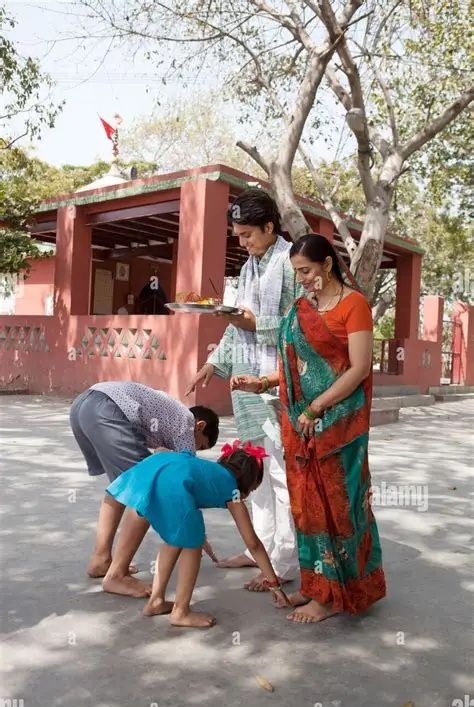
Temple leaders and residents should recognize that when elderly devotees do live in temples or āśramas they deserve to be treated with special respect and care. As Janānanda Goswami writes:
Srila Prabhupada on several occasions pointed out that elderly persons have to be treated differently. This especially applied if they are coming from a life of material responsibility into the ashram life. To be bossed around by a variety of young inexperienced boys and girls just doesn’t go down. Living in the same room with others may not be possible. Devotees who have been in the movement for many years also have to be treated differently and cannot always be treated like a young brahmacari or brahmacarini and shouldn’t be.8
In response to two letters Śrīla Prabhupāda received from an elderly devotee in the Los Angeles temple, Śrīla Prabhupāda wrote to the local GBC man:
He is feeling some inconvenience, as he states it, due to the younger devotees not showing proper respect to him as he is their elder, old enough to be their father. So they should show the proper respect, as is befitting a Vaiṣṇava, who offers respects to one and all. It is sometimes difficult for elderly people to live in our ISKCON society, so you have to make it as congenial as possible for them and see that they are peaceful in all respects.9
Concerning an elderly devotee living in the Boston temple, Śrīla Prabhupāda wrote:
So far Devahuti is concerned, she is elder woman but very nice and sober as well as qualified. Because she is of the age of all of your mothers, she should be treated very respectfully. Nothing should be ordered to her but simply suggested so that she may work in her own way. You should personally see to the comforts and conveniences so that she may feel very happy to stay with you all young boys and girls. So far I have studied and it is quite natural that she requires a little respectful dealing from the young boys and girls.10
Kṛṣṇa Himself shows respect for elderly persons, and this is one of the qualities of Kṛṣṇa that stimulates love for Him.11
Notes:
1 See Bhāgavatam 10.45.5‒7.
2 See Śrīla Prabhupāda letter to Balmukundji Parikh, February 11, 1970. Also: Bhāgavatam 3.14.18, purport.
3 Light of the Bhāgavata, purport to verse 32.
4 “So these gṛhasthas are meant for maintaining three other āśramas. A gṛhastha, a householder, because he’s given the license for sense enjoyment, therefore he has to compensate his sensual gratification by giving charities to other three āśramas: brahmacārī, vānaprastha and sannyāsa.” –Śrīla Prabhupāda lecture, March 15, 1967, San Francisco.
5 Letter to Balmukundji Parikh, February 11, 1970. Also: Light of the Bhāgavata, purport to verse 32.
6 Bhāgavatam 3.14.18.
7 Light of the Bhāgavata, verse 32, purport.
8 Vanaprastha Ashram, in the section “Elderly.”
9 Letter to Jayatīrtha Dāsa, March 14, 1974.
10 Letter to Jadurāṇī Dāsī, January 14, 1970. By the way: Devahūti Dāsī painted the original cover picture of Rādhā-Kṛṣṇa on a swing for The Nectar of Devotion and the original picture of the rāsa dance for the Kṛṣṇa Book.
11 The Nectar of Devotion, Chapter 22, quality 33.
This is part of a draft
This is an excerpt from a new book I have in the works—The Vānaprastha Adventure, a guide to retirement in spiritual life. While I’m working on it, I’ll be posting my draft here, in installments. I invite your comments, questions, and suggestions.

You must be logged in to post a comment.